Below is a summary of common risks associated with our treatments. This information is general in nature and should be discussed with your treating dentist, who will provide advice specific to your individual circumstances.
Orthodontics
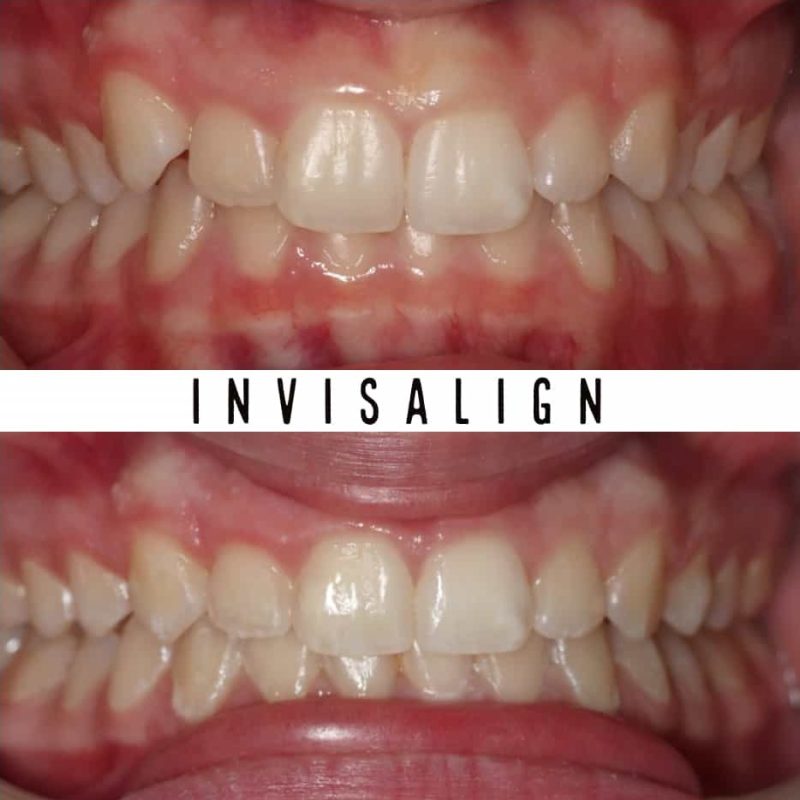
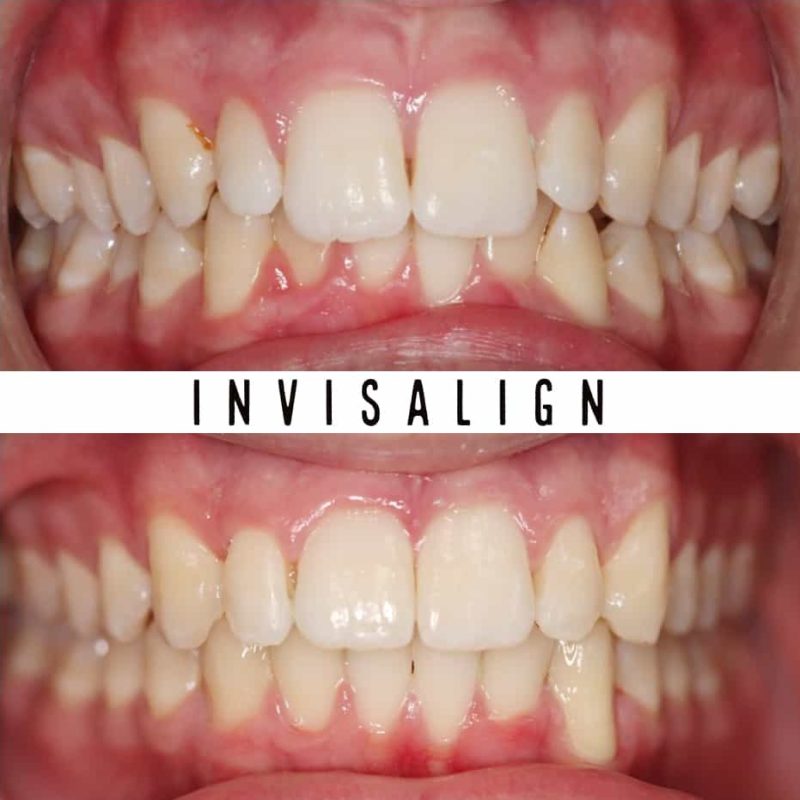
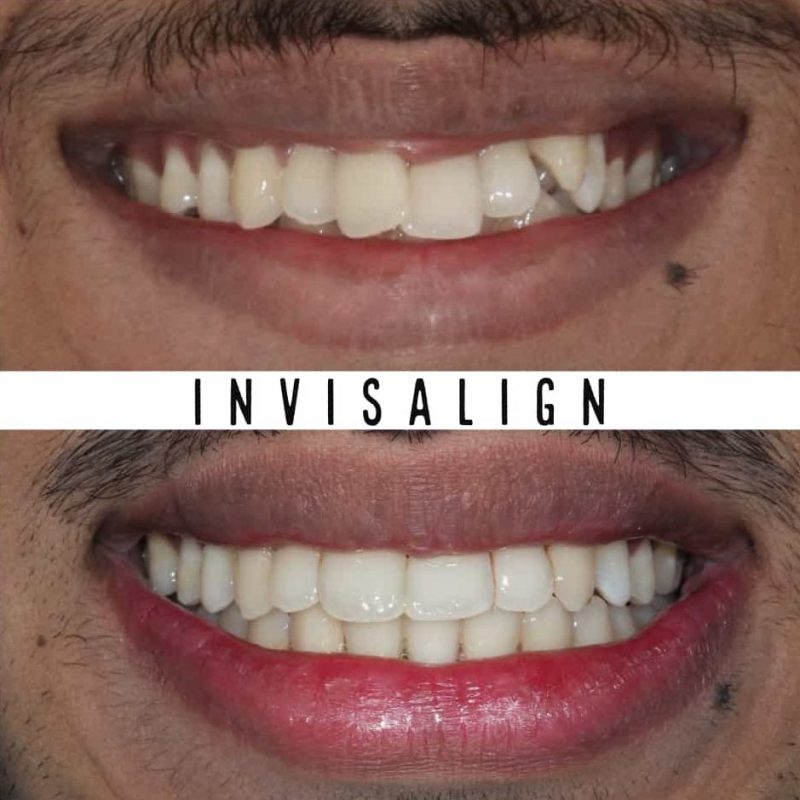
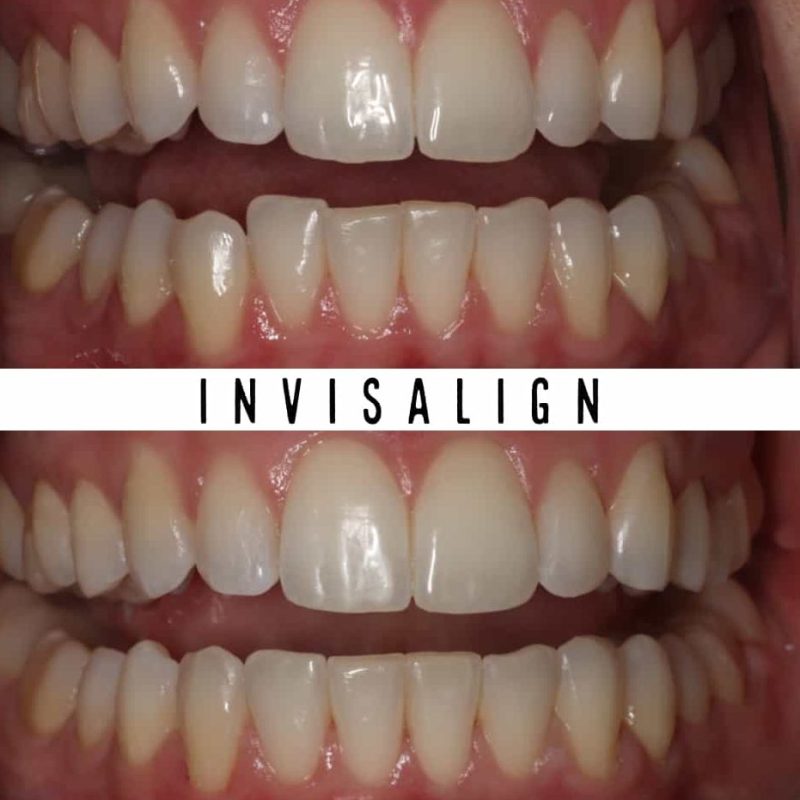
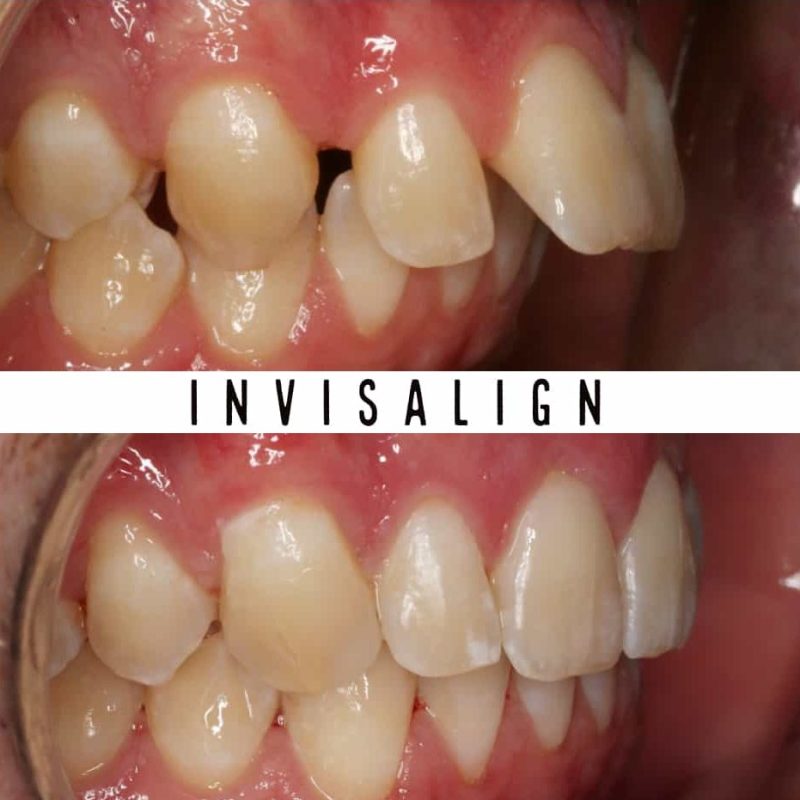
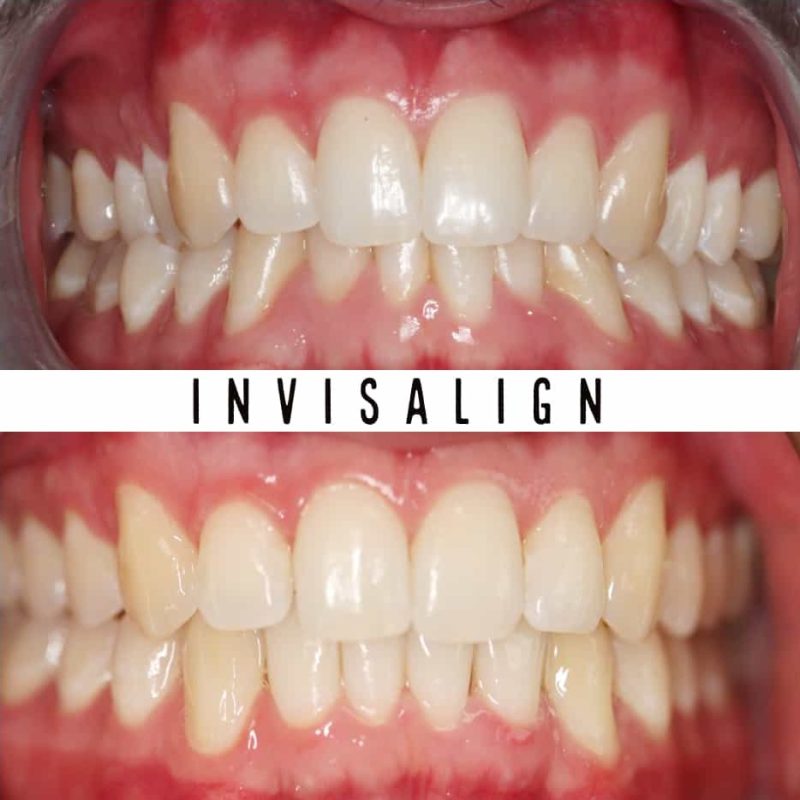
Orthodontic treatment (braces or clear aligners) can improve the function and appearance of your smile. There are some things to consider prior to starting treatment, including but not limited to:
1. Patient cooperation+
As a rule, excellent orthodontic results can be achieved with informed and cooperative patients. Patient cooperation is one of the most important factors in determining whether treatment is completed on time — a joint effort by the patient, parents, orthodontic practitioner and staff. To help achieve the most successful results, the patient must: a) keep regularly scheduled appointments; b) practice good oral hygiene including brushing, flossing, etc.; c) wear orthodontic appliances as indicated; d) wear elastics if necessary; e) eat proper foods so as not to dislodge the braces (brackets, bands); f) wear retainers after orthodontics have finished. Failure to adhere to instruction can lengthen the treatment time and can adversely affect the quality of the treatment results. In extreme circumstances, it could be necessary to discontinue orthodontic treatment.
2. Cavities, swollen gums, white spots+
Orthodontic appliances do not cause cavities or swollen gums, but because of their presence, food particles and dental plaque are retained and the potential problems will increase. Cavities, swollen gums and white spots (decalcification) can result from lack of brushing and flossing and poor oral hygiene, and need not occur if good oral hygiene procedures are closely followed. The permanent white lines (decalcification) sometimes visible around the area of the brackets or composite buttons signal the early stage of a cavity. Sugary foods and between-meal snacks should be eliminated. If a bracket or band becomes loose the patient must return to the office as soon as possible. Missed appointments could result in tooth damage due to undetected loose bands. In addition to regular monthly visits, we suggest orthodontic patients see our hygienist at least twice a year.
3. Loss of tooth vitality+
Loss of tooth vitality (nerve within the tooth dies) can occur with or without orthodontic treatment, as it is usually related to a previous injury to the tooth, or may result from a large cavity or filling. The tooth usually discolours and requires root canal treatment to maintain the health of the tooth.
4. Root resorption+
Progressive shortening of the roots of certain teeth may occur in some individuals with or without orthodontic treatment — a negative side effect that occurs rarely with fixed appliances or braces. Root resorption can be caused by trauma, injury, excessive forces, impaction of teeth, prolonged treatment and hormonal imbalances. Certain patients seem more predisposed than others. Slight root resorption usually presents no problems for patients with normal root length and healthy gums and bone; with advanced gum disease and loss of supporting bone, root resorption could cause the tooth to be lost sooner.
5. Unfavourable growth+
In younger patients, the treatment plan is determined on the anticipated amount and direction of facial growth. On occasion, facial growth does not occur as predicted and a change in treatment objectives may be necessary. Abnormal growth is a biological process beyond the dentist’s control. Growth patterns can be adversely affected by finger, thumb or tongue habits; persistent mouth breathing may cause facial growth in a more vertical direction. Our philosophy is to treat problems early and non-surgically — only in extreme cases will jaw surgery be necessary.
6. Jaw joint problems (TMJ)+
Some patients experience jaw joint problems prior to, during and after orthodontic treatment. Signs and symptoms include clicking, popping, limited mobility, and in severe cases, pain and locking of the jaw. Many people experience these symptoms independent of orthodontic treatment. Occasionally a patient may experience some symptoms during tooth movement, which hopefully subside after treatment. Jaw joint problems are not all “bite” related — tension plays a role in frequency and severity, problems are more common in females and seem to get worse with age, and muscle spasms are often the cause of pain.
7. Enamel reduction+
Reshaping the teeth before, during or after treatment may be recommended to provide room for alignment, improved appearance and stability. This reduction of the outer layers of enamel seldom presents a problem with enamel integrity or causes any increase in cavities.
8. Tooth size discrepancy+
If after orthodontic treatment minor spacing occurs between the teeth because of small or abnormal tooth size, bonding (white filling material) may be suggested to fill in the spaces — improving aesthetics and stability. These are at added costs.
9. Treatment time+
Treatment time varies with the difficulty of the problem, cooperation of the patient, and individual response. Lack of facial growth, poor cooperation with elastics or appliance wear, poor oral hygiene, broken appliances or missed appointments could lengthen treatment time and affect the quality of results. Normal treatment time with braces is anywhere between 18 to 30 months; clear aligner treatment times depend on the severity of the crowding. This period does not include “Phase 1” treatment.
10. Discontinuance of treatment+
Treatment will be discontinued due to lack of patient cooperation — including poor oral hygiene, broken appointments, lack of wear time of appliance or elastics — and in cases where continuing would unfavourably influence the dental health of the patient. Prior to discontinuance, the patient or parent will be thoroughly informed of the reasons.
11. Relapse+
Relapse is a movement or shifting of the teeth back to their original position after braces have been removed. All patients may experience at least some movement once braces or aligners are removed. In the late teens or early twenties, some patients may notice slight crowding of the lower front teeth, particularly if teeth were extremely crowded prior to treatment. Late crowding occurs in many people with or without orthodontic treatment — reasons include wisdom teeth eruption, jaw growth patterns, or muscle balance of the lips and tongue. Habits such as nail biting, thumb sucking, tongue thrusting, and mouth breathing can cause teeth to become crowded. To minimise relapse, eliminate habits and wear retaining devices as directed. Failure to wear retainers may result in undesirable tooth movement for which we cannot assume responsibility.
12. Temporary anchorage devices+
Treatment may include temporary anchorage devices (metal screw or plate attached to the bone). Specific risks: the screw(s) could become loose, requiring removal and possibly relocation or replacement with a larger screw; if the device cannot be stabilised, an alternate treatment plan may be necessary; tissue around the device could become inflamed or infected, requiring removal, surgical excision, and/or antibiotics or antimicrobial rinses.
13. Attachments, adjustments & appliance wear+
Attachments may be bonded to teeth during treatment to facilitate tooth movement and/or appliance retention, and removed after treatment. Attachments may fall off and require replacement. Teeth may require interproximal recontouring or slenderising to create space. In rare instances, slight superficial surface wear of the aligner may occur with grinding — generally not a problem as overall aligner integrity remains intact. If attachments are removed for a special occasion and then replaced, additional charges apply. Our fee does not cover replacement retainers or repair/replacement of bonded retainers. Additional fees for lost or broken aligners.
14. Periodontal work+
Gums need to be maintained routinely — gums can overgrow and may require procedures to remove these. Gingivectomies and crown lengthening procedures are at extra cost. “Black triangles” can form where the gums have receded, and also due to the shape of the teeth — options and costs can be given to reduce their appearance.
15. Use of tobacco products+
Smoking or chewing tobacco has been shown to increase the risk of gum disease and interferes with healing after oral surgery. Tobacco users are more prone to oral cancer, gum recession, and delayed tooth movement during orthodontic treatment. If you use tobacco, you must carefully consider the possibility of a compromised orthodontic result.
16. Orthodontic retention policy+
Completing orthodontic treatment does not ensure your teeth will remain perfectly aligned for life. You will need to wear retainers as instructed. Your treatment fee includes one initial set of retainers; replacements incur an additional fee. Bonded (fixed) lingual retainers are available at extra cost — a lower bonded retainer is often recommended; not all patients are suitable for an upper. Consistent retainer wear is typically required for life, as bone is always evolving; minor shifting — especially lower front teeth — may need to be accepted. Failure to wear retainers as prescribed may result in tooth movement; any relapse due to lack of retainer use is not the responsibility of our practice and may require retreatment at additional fees.
Cosmetic & surgical treatments
Porcelain veneers — risks & considerations+
Porcelain veneers are a cosmetic dental procedure, elective and not medically necessary; alternatives may exist and will be discussed. There is no guarantee of achieving specific cosmetic results, and longevity cannot be assured. Key risks: 1) Tooth reduction or surface roughening — minimal preparation may be necessary; this is irreversible, and if the veneer dislodges the exposed tooth may be more susceptible to decay. 2) Tooth sensitivity — often temporary; persistent sensitivity may require further treatment, including possible root canal therapy. 3) Chipping, cracking, or debonding — from chewing hard objects, grinding/clenching (bruxism), biting trauma, or wear of bonding agents; a night guard/splint is strongly recommended for grinders (additional cost). 4) Allergic or soft tissue reactions — rare gum inflammation or allergic responses. 5) Aesthetic limitations — perfect matching with natural teeth may not be possible; changes after permanent bonding require a new veneer at additional cost. 6) Longevity — depends on oral hygiene, diet and habits, bite forces, and regular check-ups. 7) Periodontal health — gaps or “black triangles” may develop with gum recession; periodontal surgery or grafting may be required. 8) Full mouth rehabilitation — comprehensive cases may involve crowns, bridges, implants, gingivectomy and root canal treatment; a second opinion is always offered. 9) Warranty — no guarantees on how long porcelain restorations will last; repair or replacement costs may approach the full original cost. Revision cases carry additional considerations: further reduction of tooth structure, bonding challenges, aesthetic limitations from prior work, increased root canal risk, risk of tooth loss, and heightened expectations — perfection cannot be guaranteed. A try-in stage lets you evaluate shape, colour and fit; after approval and cementation, no major modifications can be made without additional procedures and costs.
Composite bonding / composite veneers — risks & considerations+
Composite bonding uses tooth-coloured resin to repair decayed, chipped or cracked teeth, improve discolouration, close gaps, lengthen or reshape teeth, replace amalgam fillings, or protect exposed roots — typically in a single visit, and one of the least invasive, most cost-effective cosmetic treatments. Benefits: minimally invasive, single appointment, cost-effective, immediate improvement, reversible in most cases. Limitations: less stain-resistant than porcelain; not as strong as crowns or veneers; more prone to chipping, wear, or discolouration; may require touch-ups or replacement every 3 to 7 years. A night guard (splint) is strongly recommended for grinders. Risks: slight tooth surface preparation; temporary sensitivity; chipping or breaking from hard foods, bruxism or trauma; rare soft-tissue or allergic reactions; aesthetic limitations (perfect shade matching may not be possible); periodontal concerns including “black triangles”; and in full-mouth cases, multiple procedures may be involved. No warranty: bonded teeth can chip, stain or break — repairs or replacements range between $300–$800 per tooth depending on damage. Care: brush twice daily and floss; regular check-ups; avoid biting hard objects; avoid tobacco, coffee, red wine and staining foods; wear a night guard if advised.
Dental implants — risks & considerations+
Dental implants are a surgical procedure to replace missing teeth with artificial roots, involving a surgical phase (which may include bone grafting or ridge augmentation) and a prosthetic phase. Local anaesthesia is administered; sedation may be offered. Healing (osseointegration) typically takes 3 to 6 months. Principal risks: pain, swelling, bruising and bleeding post-operatively; infection at the implant site; failure to properly integrate with bone; numbness, tingling or altered sensation (lip, tongue, chin, gums) that may be temporary or, rarely, permanent; damage to adjacent teeth, nerves or anatomical structures (e.g. sinuses); bone loss or gum recession over time; prosthetic complications (loosening or fracture of crown, bridge or denture, wear, aesthetic mismatch); delayed healing or need for additional surgery; removal of implant in failure cases; increased costs and treatment time if complications occur. Alternatives: doing nothing, removable dentures, fixed bridges, or alternative implant configurations. Your role: excellent oral hygiene, all follow-up appointments, following instructions on diet, smoking, alcohol and medications, and reporting issues immediately — smoking and poor oral health may significantly reduce implant success. Prosthetic components may incur separate fees; future maintenance and repairs are at your expense. While implants have high success rates, no guarantee can be made for long-term success.
TMJ injections — risks & considerations+
We provide injections for the management of TMJ (temporomandibular joint) dysfunction and associated muscle pain. These are not cosmetic injections. A purified neurotoxin is used that works by blocking nerve signals to the injected muscles, reducing muscle activity — effects usually start within 2–5 days and last approximately 4–6 months. Alternatives: no treatment, other injectable or oral medications, dental or orthodontic treatments, surgery, or non-drug therapies (physical therapy, appliances). Possible side effects: bruising or swelling at injection sites; mild pain or redness; under- or over-correction; facial asymmetry; paralysis or weakening of a nearby muscle (drooping eyelid, difficulty closing the eye, double vision, difficulty speaking or drinking from a straw); numbness; generalised weakness, flu-like symptoms, headache, nausea; antibody development reducing effectiveness over time; permanent loss of muscle tone with repeated injections; infection, allergic reaction or inflammation; and a theoretical risk of disease transmission via human-derived components (albumin) — no known cases to date. Contraindications: pregnancy or breastfeeding, known allergy to albumin or components, infection or skin disease at the site, muscle or nerve disorders (e.g. Myasthenia Gravis, Eaton-Lambert Syndrome, ALS), or injections within the past 3 months. Treatment is temporary; repeat treatments may be needed, are likely not covered by insurance, and results vary between individuals — no guarantee can be made that results will meet expectations.
All-on-4 & full-arch implants — risks & considerations+
All-on-4 and full-arch implant treatment replaces a full arch of teeth using a fixed prosthesis supported by dental implants, and involves a surgical phase (which may include tooth extractions and bone recontouring) and a prosthetic phase. Local anaesthesia is administered; sedation may be offered. Healing (osseointegration) typically takes 3 to 6 months, during which a temporary prosthesis is worn before the final one is fitted. Principal risks: pain, swelling, bruising and bleeding after surgery; infection at surgical sites; failure of one or more implants to integrate with the bone, which may require removal and additional surgery; numbness, tingling or altered sensation of the lip, tongue, chin or gums that may be temporary or, rarely, permanent; damage to adjacent structures such as nerves or sinuses; bone loss or gum recession over time; prosthetic complications (loosening, fracture, wear or aesthetic mismatch of the bridge); speech and eating adjustment periods; and increased cost and treatment time if complications occur. Alternatives: doing nothing, removable full dentures, implant-retained overdentures, or conventional bridges where suitable. Your role: excellent oral hygiene, attending all follow-up appointments, following instructions on diet, smoking, alcohol and medications, and reporting problems promptly — smoking and poorly controlled medical conditions may significantly increase the risk of implant failure. Results and longevity cannot be guaranteed and depend on individual factors.
Gummy smile treatment — risks & considerations+
Gummy smile treatment reduces the amount of gum tissue shown when smiling and may involve laser or surgical gum contouring (gingivectomy), crown lengthening, or in some cases muscle-relaxing injections — it is a cosmetic, elective procedure that is not medically necessary, and alternatives will be discussed. There is no guarantee of a specific cosmetic result. Principal risks: temporary discomfort, swelling, bleeding or tenderness of the gums; sensitivity of exposed tooth surfaces; risk of infection during healing; gum tissue may not heal exactly as planned or may partially regrow, sometimes requiring a further procedure; uneven or asymmetric gum contour; recession or exposure of tooth roots; and, where injections are used, the risks noted in the TMJ injection section such as temporary asymmetry or reduced effect over time. Bone recontouring may be needed in some cases for a stable result. Alternatives: no treatment, orthodontic options, restorative treatment such as veneers, or a combination. Your role: maintain excellent oral hygiene, follow all post-procedure care instructions, and attend review appointments. Healing times and final appearance vary between individuals.
Important information
— Every procedure carries risks and limitations. Results cannot be guaranteed.
— Your dentist will provide you with a detailed consent form before treatment, outlining risks, benefits, and alternatives specific to your care.
— Ongoing maintenance, oral hygiene, and regular check-ups are essential to long-term success.
This page provides general information about potential treatment risks and is not a substitute for personalised advice. Please consult your dentist at The Smile Designer to discuss your individual needs, suitability for treatment, and any questions you may have.